
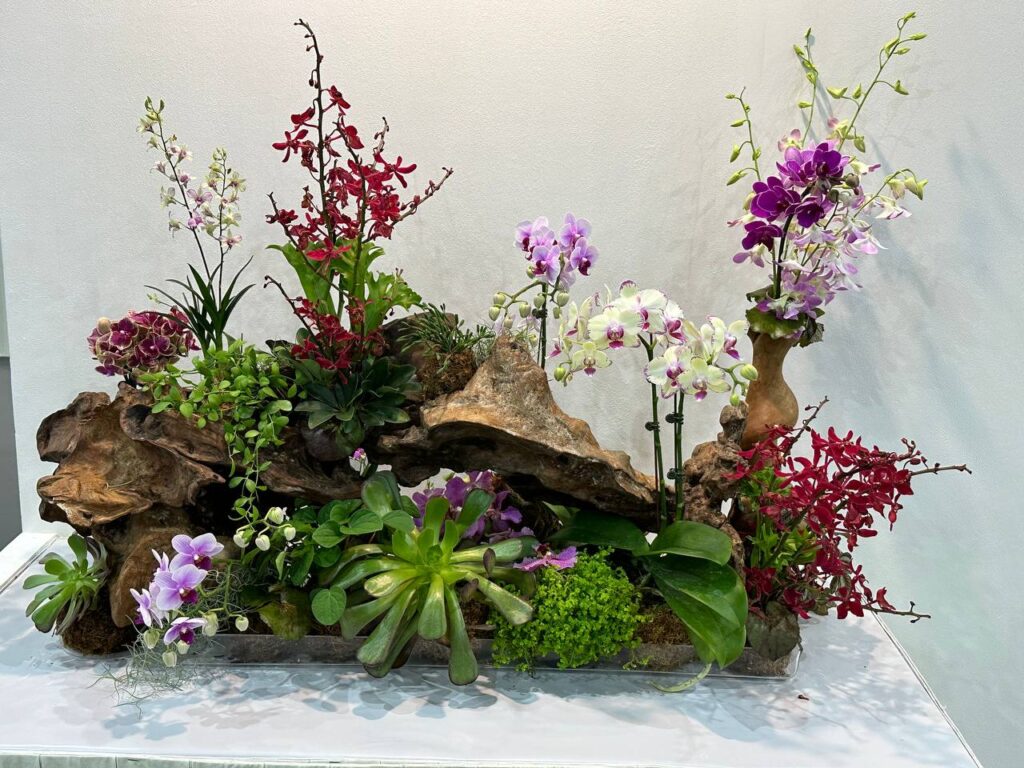
An orchid flower may last for only a few weeks or months, but the pleasure of growing orchids can continue for a lifetime.
At first, you may simply admire the flowers. Their colours, patterns and unusual shapes can make an ordinary windowsill feel special. Then you begin to notice something more: a fresh root tip, a new leaf emerging from the crown or a small green nub that might become a flower spike.
Before long, you are no longer just keeping a decorative plant. You are watching a living story unfold.
That is why growing orchids can become such a lasting and rewarding hobby. The joy is not limited to the day you buy a flowering plant. It returns every time you observe, learn, solve a problem and help an orchid bloom again.
The Joy Begins with a Single Orchid
Many orchid collections begin in a very ordinary way.
Someone receives a Phalaenopsis, commonly called a moth orchid, as a gift. Another person is attracted by a beautiful plant at a supermarket or garden centre. A curious buyer takes one home, places it near a window and hopes the flowers will last.
Eventually, the flowers fall.
This is the point at which many new owners assume the plant has finished its useful life. However, an orchid without flowers is not necessarily dying. It may simply be entering a period of leaf and root growth before its next flowering cycle.
Once you understand this, the plant becomes more interesting.
Instead of asking, “Why are the flowers gone?” you begin asking:
- Is the plant receiving enough light?
- Are its roots healthy?
- Am I watering it at the right time?
- Is it growing a new leaf or flower spike?
- What can I do to help it bloom again?
Those questions are often the beginning of a lifelong hobby.
Orchids Teach Us to Notice Small Things
Orchid growing develops the habit of careful observation.
A healthy new root may have a bright green or reddish tip. A firm new leaf may indicate that the plant is actively growing. Silvery roots inside a clear pot may suggest that watering time is approaching. A slight change in the direction of growth may reveal the beginning of a new flower spike.
These changes are easy to miss if we look at the plant only occasionally. But when we slow down and observe carefully, they become small moments of discovery.
Orchids rarely rush. A new leaf may take weeks to develop. Roots may emerge gradually. A flower spike can take months to grow, form buds and finally open.
This slow progress is part of the pleasure.
In a world filled with instant messages, rapid results and constant distractions, orchids invite us to pay attention to what is happening quietly.
Every New Root Is a Small Victory
A new orchid grower may focus mainly on flowers. An experienced grower often becomes just as excited about roots.
This is because healthy roots are the foundation of a healthy orchid. They absorb water and minerals, attach the plant to its support and help it survive periods of limited moisture.
When an orchid has suffered from damaged or rotting roots, the appearance of one fresh root tip can be deeply encouraging. It shows that the plant is responding to improved care.
The same is true of a new leaf. It may not be as dramatic as a spray of flowers, but it is evidence of progress.
Orchid growing changes the way we define success. Success is not always a plant covered in blooms. Sometimes it is:
- stopping root rot before it spreads;
- helping a dehydrated plant recover;
- recognising a watering problem;
- producing a strong new leaf;
- encouraging healthy roots after repotting; or
- keeping a newly purchased orchid healthy after its original flowers fade.
These modest achievements build confidence. They also make the next flowering season more meaningful.
Reblooming Feels Better Than Buying Another Blooming Plant
A flowering orchid bought from a shop is beautiful, but an orchid that reblooms under your care brings a different kind of satisfaction.
You have seen that plant through its quiet months. You have watered it, watched its roots, adjusted its light and waited patiently. When a flower spike finally appears, the reward feels personal.
Then the buds begin to form.
Each morning, you look for changes. One bud grows larger. Another begins to show colour. Finally, the first flower opens.
That bloom is more than decoration. It is evidence that the plant has received enough light, water, nutrition and suitable growing conditions to complete another cycle.
You did not manufacture the flower. The orchid did that. But your care helped make it possible.
This partnership between plant biology and human attention is one of the deepest pleasures of orchid growing.
Orchids Turn Learning into a Lifelong Adventure
No one learns everything about orchids in a weekend.
Even the familiar Phalaenopsis has much to teach us about roots, leaves, light, temperature, humidity, airflow, potting media, watering and flowering.
As your confidence grows, you may become curious about other orchids. You may discover the colourful flowers of Cattleyas, the tall canes of Dendrobiums, the dancing sprays of Oncidiums, the striking roots of Vandas or the unusual slipper-shaped flowers of Paphiopedilums.
Each type grows a little differently.
Some prefer to dry more quickly. Some need cooler nights to encourage flowering. Some grow in pots, while others perform well in baskets or on mounts. Some produce new growth from the crown, while others develop pseudobulbs, canes or fans.
There is always another plant to understand and another growing skill to improve.
This means orchid growing does not become dull once the beginner stage has passed. The hobby grows with you.
The Hobby Rewards Curiosity, Not Perfection
Many people hesitate to grow orchids because they believe these plants are delicate or difficult.
Orchids are not impossible plants, but they do respond badly when their basic needs are misunderstood. A Phalaenopsis may decline when it remains waterlogged, receives too little light or is left in old, decomposed potting material.
The answer is not perfection. It is understanding.
You do not need an expensive greenhouse or scientific equipment to enjoy orchids. Many people grow healthy Phalaenopsis plants near bright household windows or under simple grow lights.
What matters is learning to read the plant.
If leaves become limp, the answer is not automatically more water. The roots may be damaged and unable to absorb moisture. If an orchid refuses to flower, additional fertiliser may not help if inadequate light is the real problem.
Every difficulty becomes an opportunity to investigate:
- Observe the symptoms.
- Check the roots, leaves and growing conditions.
- Identify the most likely cause.
- Make one sensible adjustment.
- Allow time for the plant to respond.
That process turns mistakes into knowledge.
Orchids Bring Nature into Everyday Life
Not everyone has a large garden. Many people live in apartments, condominiums or homes with limited outdoor space.
Orchids can bring a meaningful experience of nature into these smaller spaces.
A few plants near a bright window can create a place of colour and calm. Checking them in the morning may become a pleasant daily ritual. Watering, inspecting roots and removing an old flower can provide a quiet break from work and household responsibilities.
The orchid does not demand constant attention. In fact, too much attention—especially too much watering—can cause problems.
Instead, it asks for regular observation and appropriate care.
This makes orchid growing suitable for many different people: busy working adults, retirees, beginners, experienced gardeners and anyone who enjoys learning through patient observation.
An Orchid Collection Becomes a Record of Memories
Over time, orchids often become connected to important people and occasions.
One plant may have been received as a birthday gift. Another may have been bought during a family outing. A rescued orchid may remind you of the first time you successfully grew new roots. A particularly reliable plant may bloom at almost the same time each year.
The plants become part of the rhythm of the home.
Some orchids can remain in a collection for many years when their needs are met. Each flowering adds another chapter to their story.
You may remember where the plant once stood, how small it was when you bought it or how worried you were when its roots began to fail. When it blooms again, the flowers carry those memories with them.
This is one reason the joy of orchids can last far beyond a single flowering season.
Orchid Growing Connects People
Although caring for an orchid can be a peaceful individual activity, the hobby also creates opportunities to connect with others.
Orchid growers enjoy exchanging experiences, comparing growing methods and celebrating one another’s successes. A question about yellow leaves may lead to a helpful discussion. A photograph of a new flower spike may encourage another beginner not to give up.
Orchid societies, exhibitions, websites and YouTube channels bring together people with different levels of experience. Some are growing their first Phalaenopsis. Others have spent decades studying large collections.
Everyone still has something to learn.
The most useful orchid community is not one that makes beginners feel embarrassed about mistakes. It is one that helps them understand what their plants are telling them.
That is the kind of community Orchid Bloom Lab aims to support.
Science Makes Orchid Growing More Enjoyable
Orchid care is sometimes surrounded by confusing advice.
You may hear that orchids should be watered with ice cubes, misted every day or fed with a mysterious “bloom booster.” You may also be told to follow a fixed watering schedule without checking the roots, potting material or local growing conditions.
Simple rules can sound reassuring, but plants do not live by slogans.
A better approach is to understand the reason behind each care practice.
For example:
- Light supplies the energy needed for growth and flowering.
- Healthy roots allow the plant to absorb water and nutrients.
- Air spaces in the potting material help roots obtain oxygen.
- Temperature affects growth and may influence flower-spike development.
- Watering frequency depends on the pot, medium, airflow and environment.
- Fertiliser supports growth, but it cannot correct inadequate light or dead roots.
Science does not remove the wonder from orchid growing. It makes the wonder easier to understand—and success easier to repeat.
The Flowers Are Temporary, but the Joy Keeps Returning
Every orchid bloom eventually fades. That does not make it a failure.
Flowering is one stage in a continuing cycle. After blooming, the plant may rest briefly, grow new roots and leaves, store energy and prepare for a future flower spike.
Once you understand the whole cycle, you stop judging the orchid only by whether it has flowers today.
You begin to appreciate:
- the promise of a new root;
- the strength of a firm leaf;
- the mystery of an emerging spike;
- the anticipation of swelling buds;
- the beauty of the first open flower; and
- the satisfaction of knowing that your care helped the plant thrive.
The individual flowers do not last forever. The joy comes from seeing the cycle begin again.
Begin With the Orchid You Already Have
You do not need a large collection to become an orchid grower.
Begin with one plant.
Look at its leaves. Examine the roots through the pot, if they are visible. Notice how quickly the potting material dries. Observe the amount of light it receives. Record when you water it and watch how it responds.
Do not worry if you have made mistakes. Most orchid growers have overwatered a plant, misunderstood a root or waited too long to replace old potting material.
The important thing is to become more observant with each growing cycle.
One healthy root can lead to another. One successful rebloom can lead to years of curiosity. One orchid can open the door to an entire living world.
Keep Growing with Orchid Bloom Lab
At Orchid Bloom Lab, we believe orchid growing becomes easier and more rewarding when advice is based on plant science and explained in everyday language.
Join the Orchid Bloom Lab email list for practical orchid-care guidance, diagnostic tips and useful resources designed to help you understand your plants and grow with greater confidence.
Join the email list at https://orchidbloomlab.com
You can also subscribe to the Orchid Bloom Lab YouTube channel for clear visual guidance on watering, root health, repotting, lighting, flowering and rescuing troubled orchids.
Subscribe at https://www.youtube.com/@OrchidBloomLab
Your orchid does not need you to know everything today. It simply needs you to keep observing, learning and responding.
The flowers may come and go, but every new root, leaf, spike and bloom gives you another reason to look forward to tomorrow.
That is why growing orchids is truly a joy that can last forever.